return

Return to peasantsplot.com

Tuesday, May 26, 2015

Back in Business!

We are feeling strong this year and excited to be back in Chicago and Manteno area with our Full Season Vegetable Shares PLUS Apples PLUS Honey PLUS Home Delivery. We aim to please.

This is our favorite time of year, full of promise and plantings. We plant all the way into August. Since both July and August have the additional weed pressure, those months can get a little...intense.  May and June--not so bad! Early this month we welcomed our full time intern Lucy who hails direct from the New York City Farmers Market scene. She is re-acclimating to the midwest where she grew up and we are grateful. If you are a Worker Shareholder, you will get to know her well!

The following photos are just some I snapped (tapped) the last couple of weeks to show signs of summer greens and the beginnings of heirloom tomatoes and more.

Spinach! 
Worker Shareholders get eggs as a bonus this month.

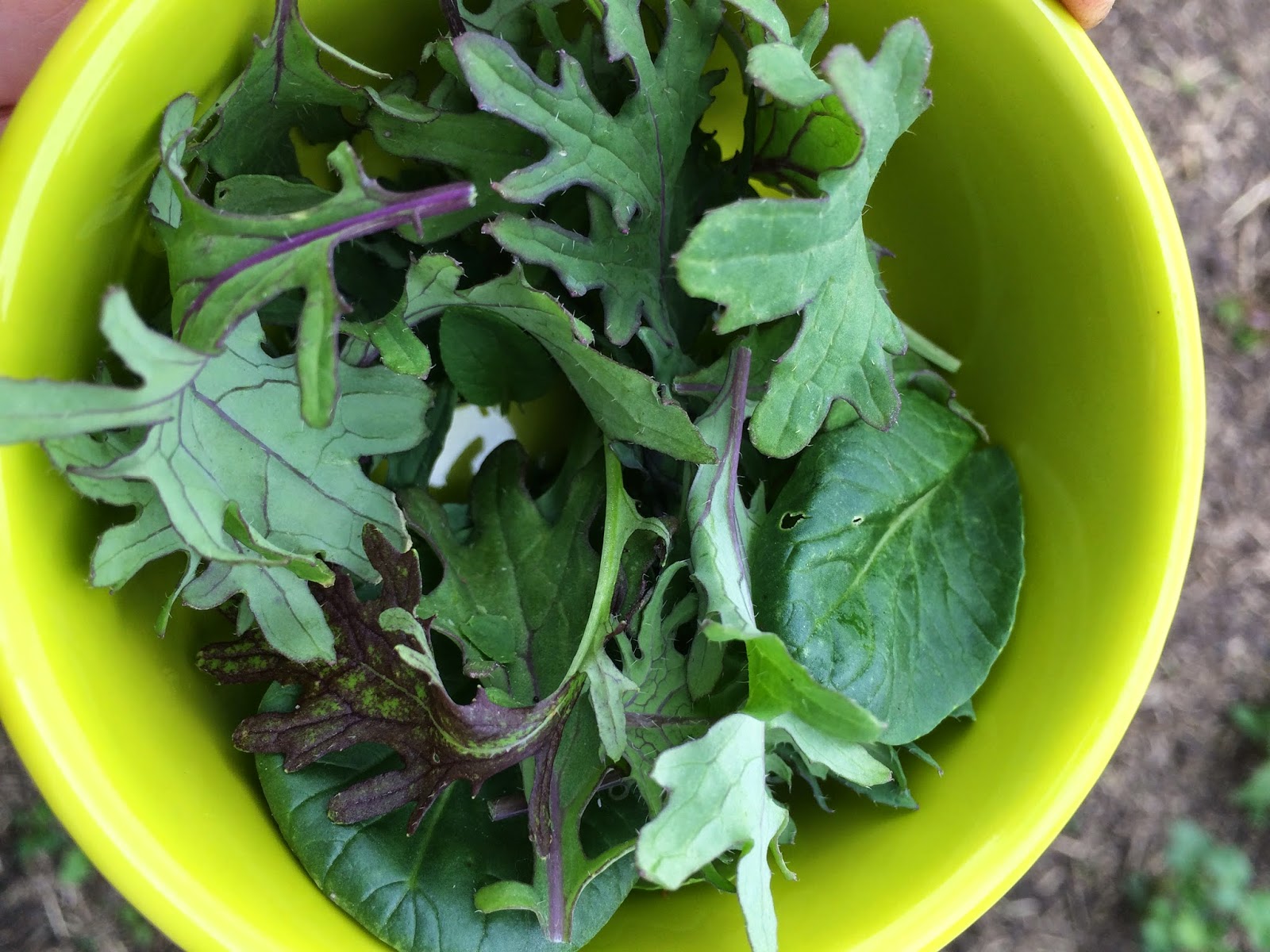
Baby kale and spinach mix!

Salad mixes abound!
Our cultivators.

Tomatoes transplanted last week!

Lucy!

Us! And Merley Girl.


Thursday, March 12, 2015

Community Supported Agriculture is Ready to Perform

A short essay about CSA farming and the wild and wacky people involved.

*******

Farmers who run CSA programs are of a whole different breed. I can say this because I am a CSA farmer. My husband is. Many of the best people I know are CSA farmers. So let me tell you a little bit about them:  They are geniuses.


CSA farmers all toil in the typical ways farmers toil (sun, early hours, long hours, dirt under our nails). We also toil in atypical ways. When the average person thinks “farmer,” most would not conjure the image of someone at a computer running a Kickstarter campaign, or a farmer silhouetted against his field typing into a smartphone. How many people associate farmers with Facebook posts or spreadsheets or yoga events or talent shows?


Today, growing vegetables is not the only work of a farmer. It is just one job among the many other jobs associated with a small business, including but not limited to marketing, education, awareness, community-building. Events. Blogs. T-shirts. Guitars.

The truth of it is that much of my job feels like grass-roots activism instead of a small for-profit enterprise. Some may say that’s bad business. I say it’s exciting. After all, why we did we get into this in the first place? Why CSA?

The rise of this new model of agriculture came partially as a response to a rise in industrial farming and the opening of global trade that pressures companies to source from all over the world. Documentaries such as Food Inc. and others have spiked a concern over GMOs and the conditions under which food is produced: pesticides, labor conditions, animal conditions, etc. These are legitimate concerns! They ask the important question: Where is my food coming from? The CSA experience/relationship is an effort to put people back into the picture of food production.


When my farm in Manteno, Illinois began in 2007, my husband Todd and I were meeting a demand — and joining a movement for more control over our country’s food choices. People were clamoring for more CSA farms. In the 8 years since, CSA farms have increased in number, but the consumer base plateaued.  To get an idea of the growth potential that fuels us:


  • The Madison, Wisconsin, metropolitan area ranks as a virtual hotbed of CSA activity. It has a population of approximately 600,000, and CSA farmers there serve 9,500 households, according to FairShare CSA Coalition’s  2013 Annual Report.
  • The Chicago metropolitan area, by comparison, has a population of approximately 9,000,000 and serves roughly the same number of households (based on an average of 100 households per CSA multiplied by 80-90 CSA farms serving Chicagoland).


So there is a lot of room to grow, Chicago!  Your farmers are up and running, and there’s a lot of local food to eat.

The Creation of Band of Farmers
The history of the Band of Farmers group illustrates the collaborative spirit of CSA. It is our formal coalition, in partnership with the Illinois Stewardship Alliance, with aims to promote the CSA model through consumer education and other opportunities.

The Band of Farmers website, newly live, is a place where consumers can now go for quick answers about Community Supported Agriculture. Together we see a bright future that includes a searchable directory of farms (expanding every day!), collaborative events, educational outreach, cooperation with health insurance companies, and much more.

We see future CSA farming as so tightly integrated into this country’s culture that the question “Who’s your CSA?” is heard all over, by people of all walks of life who care deeply about what they are eating and where it came from.

Community Supported Agriculture is ready to perform.

So what’s all this about a Talent Show?
Please join us in celebration at The Third Annual CSA Farmer Talent Show on Saturday, March 28 at The Hideout in Chicago.  Go to the Band of Farmers Facebook Page to learn more or here.


See us as farmers and as people, dancers, singers, poets, jugglers. But mostly farmers.

For those attending FamilyFarmed‘s Good Food Festival & Conference, we have a special discount for you!  Bring your Good Food Fest ticket stub to the CSA Farmer Talent Show and get in for just $5 (tickets are normally $15.) More details can be found on our Facebook page or at www.bandoffarmers.org.

And if you are going to Good Food Festival & Conference, please stop by and visit the CSA Pavilion in the Exhibit Hall on Saturday March 21st. Todd and I will be there to answer your questions plus a host of other farmers like us.

Thank you!
-Julia


Monday, October 20, 2014

Okay, what is an heirloom anyway???

An heirloom is an open-pollinated plant variety from seeds that have been saved and then passed down generation by generation for at least 50 years.  "Open-pollinated" means that the pollination is done via insects, wind or birds.  There's a lot more on this topic and subcategories to go into, but thinking of open-pollination as a process by mother nature is good enough for now.  Hybrids are different.  They are offered by most seed companies, organic included. Hybrids rely on controlled pollination by humans in which two different plant varieties are selected for specific traits and then bred together, ma and pa, to make very desirable offspring.  A desirable trait might be some kind of disease resistance or "high yielding." I hope I'm doing an okay job of describing all this.

There's a whole world of gorgeous, fascinating heirloom tomatoes out there that you never see in the store.  That's why farmers markets and CSAs are really great!  The reason heirlooms are rarely in the big box stores is because they are usually too delicate to ship in mass quantity and have a shorter shelf life. Stores love hybrids that have been bred for long road trips (from east or west coast or Mexico for example) and long shelf life.

Anyway, hybrids are NOT GMOs.  GMOs take more time to write about, so I might as well just reference one of my previous posts to help clarify any questions there.  Click here for a very brief GMO 101 lesson.  And, after getting sort of freaked out about that, here are some pretty photos.  Don't miss the Tomato Tips at the very end!


Striped German, heirloom

Striped German (heirloom), yellow Sunkist (hybrid), 
German Johnson (heirloom), 
Japanese Black Trifele (heirloom),
clockwise from the upper  left.

The perfect tomato.  Arbison, hybrid.


Gnarly!  Striped German, heirloom!

Heirlooms get funky,  they split easily and their yields are horrible.
But they taste better than anything you've ever tried at Trader Joes.

Japanese Black Trifele, heirloom. This isn't the best photo because
you often see this variety with green shoulders and a little darker.
They are known for their pear shape. This one looks like two grew together....


Clockwise from upper left, Arbison, German Johnson (pink! heirloom!) and Black Trifele.


Tomato Tips:

Feel for softness to determine ripeness.  Don't expect heirlooms to ripen to a red.

Place tomatoes on the counter, out of direct sun, with space all around each of them. Do not store them in the refrigerator unless you want to RUIN EVERYTHING.


Monday, September 15, 2014

Yes You Can

Our "Royal Tomato CSA" shares have all started despite our tomato delay. So all "Royal Tomato Shares" are now including  beets and greens and other fall delights until tomatoes are ready. Our tomato plants are toasty in our high tunnel and conditions are right for the ripening. WHEN THEY DO COME IN (not "if"), shareholders watch out! Instead of the 2-3 lbs a week over the course of a couple of months, shareholders may have many more tomatoes to deal with all at once.  My suggestion? Get ready, set…


This summer I co-taught a canning class with my friend Julie Larsen of Nisse Farm.

All of our info came from a crash course with Drusilla Banks at the University of Illinois Extension office. In 2009, another Extension office in Georgia produced a comprehensive Complete Home Canning Guide, now a very very large pdf file for free download. The USDA uses this guide as the main reference for home canning standards today.
If you have never canned, read about your method of canning in the guide first.  You will be choosing either "Hot Water Bath" or "Pressure Canner" method depending on what equipment you are using and what you'd like to can.  Hot water bath canning can only be used for fruits, pickles and tomatoes (+lemon or citric acid), basically all high acid products.  If you want to can with other vegetables or meat you will definitely want to invest in a pressure canner and make sure the gauge is working properly (the guide talks more about this).  All this collected data is for the purpose of making sure you do not poison yourself and others with botulism. :)  The techniques involve eliminating bacteria that causes the poisoning, making sure the product is sufficiently acidic (if using the hot water method), and ensuring a proper seal.
In our class, Julie and I covered the most common canning activity:

Tomatoes by Hot Water Bath Canning

Some interesting highlights:

  • You don't have to boil the lids! Imagine that! Mom and grandma always had a little saucepan bubbling for the lids.  These days, since the update in 2009, you just have to sanitize by washing lids in hot, soapy water.  Never reuse lids from year to year.
  • If your canning process is at least 20 minutes, you don't have to worry about sterilizing the jars.  Just heat them enough to accommodate your hot pack and so that they don't crack, about 140 degrees.
  • Open kettle method is considered not USDA safe.
  • Tomatoes are actually just barely on the acid side of the pH scale.  You must add bottled lemon juice or citric acid per each unique recipe!
  • Use a recipe always and choose one that is post 1985 for the safest instructions.

ANYONE CAN CAN.
You just need to pay attention, clear your schedule, clean your counters and off you go.  There is no greater satisfaction than a colorful pantry of locally grown produce.  In my opinion.

AND…OR... ANYONE CAN FREEZE.
If you don't have the mental space and time to can but DO have space in the freezer, just blanch, peel and freeze those extra tomatoes! OR don't peel. Just throw them in a freezer bag--you can use for delicious sauce in the middle of winter!

Spending time in my kitchen and wishing you good times in your own,
Julia


Tuesday, August 19, 2014

Looking around.


Every Field Needs Its Fallow Year
After six exhausting "start-up" years, this year we decided to slow things down and take the time to look around.  On both a human and ground level, we are using this year to reboot and restore. We are restructuring, rethinking, rebuilding the farm. 
Inspired by the contributions from our spring fundraiser and by all our farmer friends, we have achieved a good part of our project goals already. In addition to growing veggies for our Tuesday market, here's some of what Todd's been up to:

High Tunnels Oh High Tunnels - Passive-heat greenhouses extend the growing season by at least two months. We have much of this project already completed, including concrete anchors, but still need to finish out ends of two tunnels with polycarbonate panelling (one is done!!). These semi-permanent ends help during high winds because they enable us to seal the structure up fast. The high tunnel project is labor-intensive and has been very difficult to complete when we are at full production.  We now have one fully installed, anchored, sealed and housing tomatoes!

Root Crop Washer - This will speed up washing of bulk carrots, beets and potatoes. When I say "speed up," I mean it!  Right now, depending on the size and dexterity of the worker's hands, it can take a full day to complete the washing process for just half of our CSA group. 

Cold Storage - In past years our cold storage has always been short-term, using ice packs and 100-qt coolers. Actual refrigeration will help our efficiency by enabling us to spread out the harvest during the week instead of harvesting just the day before delivery. We are deciding between a few options of walk-in coolers to install at the back end of our packing shed. 


Me between two of my favorite people:
Kerry from Bloom Yoga and Lisa of Blue Sky Bakery.
Pre-plastic.
Working hard this spring to finish the one tunnel for tomatoes.
"Planet Claire" just left for Navy camp--we will miss her.
She was one of our toughest and FASTEST workers out here!

This photo was taken August 15th, 2014.  We have lots of plants, flowers and small fruits.
Let's hope for some hot weather to get these things going fast!
Kale, too, and always.

Yes, we are growing peppers this year.  Look for them at market soon!

Does anyone know what this tree is?


Winter squash.

Very happy bees--a good honey year!

Monarchs and bees love my cup plant.

Pickled beets and carrots so far!

While Todd is toiling outside, I've been busy with my off-farm career (massage therapy and yoga instruction) while staying active in the kitchen, including preparation for my...
In the meantime collecting energy and butterflies,
Julia

Wednesday, March 26, 2014

Vegetables Are People, Too


"Vegetables Are People, Too"
The nuance of this long snappy title for my 2014 Growing Season Calendar is being revealed as we speak. I see it in CSA efforts all over the world."Vegetables Are People, Too" is in fact a love story to CSA farming. Robyn Van En, the originator of this model of agriculture in America, translated a term from the Japanese model "teikei" as food with a face. Vegetables are people.

What started all the efforts to put a face to farming? It came partially from a rise in industrial farming and the opening of global trade that pressures companies to source from all over the world. Florida grocery stores now sell oranges from Canada. Illinois stores sell tomatoes from Mexico even in the summer.  Documentaries like Food Inc. and others have spiked a concern over GMOs and the conditions under which food is produced: pesticides, labor conditions, animal conditions, etc. They are legitimate concerns, so that's why people have started to care. Where is my food coming from?

The CSA experience/relationship puts people back into the picture of food production by building community. This is done through events on and off the farm, emails, notes, photos, updates. Some CSA members will even come out to put an hour or two into harvesting or weeding. Not required!

CSA puts people back into the much larger picture, too. It is a voice saying "I want to have a meaningful attachment to food again. Before I buy a vegetable, I want to know if it was grown with synthetic, persistent pesticides. I want to know if my food has been bioengineered in a lab. I want to know the farm laborers are not slaves. If there's a huge pile of manure from a factory farm next to my cabbage, I want to know that, too, because I'd probably not want to buy it then."

You can certainly go to the store and find cheaper produce. Plenty of multinational corporations will be happy to accommodate you. I go there in the winter on my way home from my off-farm job and I'm super hungry for a piece of cheese or something. Ideally, I'd have sourced that cheese from an ethically sound place, but sometimes you need a piece of cheese when you need a piece of cheese.

No one has to become a monk when they join a CSA farm, but you will naturally--by default--become more respectful and more connected to the whole picture which everyone--by default--is a part of anyway.  Farmers grow, you eat.


Wednesday, March 12, 2014

Two Words: Organic and Sustainable


“I love organics.”

I hear this from people a lot, mostly after I tell them I have an organic vegetable farm.  But what does loving “organics” mean to people? 

In February, I tackled this subject in a presentation to a monthly Green Drinks group, a network of people in the area that care about the environment and all things “green.”

The way I broached the subject was to ask the audience to consider what part of “organics” resonates with them.  Then I broke it all down:


"Organic"
No synthetic chemicals and no GMOs.

Why should we care about the use of synthetic chemicals? Pesticides have been around since WWII and were invented alongside chemical warfare. Since their relatively new introduction into the world, pesticides have been scientifically linked to problems with many body systems: reproductive, endocrine and immune. And, frighteningly, pesticides have also been linked to cancer. The most heart-palpitating, gripping seminar I’ve ever attended was by a scientist in this field of study.  He said that small doses of pesticides from residue on food and in our water have a real impact across generations because pesticides cause gene mutations.  A user-friendly website that you can go to learn more is here: http://www.sustainabletable.org and then follow links to Food and Industrial Agriculture Impacts. Or peruse as you wish.

USDA Organic Certifiers mostly care 
about what farmers do NOT do,

  but most small organic farmers think of their farm as an ecologically integrated system in which

what we DO do is just as important. 
That brings us to another word, “sustainable.”


“Sustainability”

      Sustainability results in a positive environmental impact.  It is “organic” seen as a long-term agricultural system. Sustainable farmers consider the future of our food, soil, water, air, ecologies, communities and even our own human genetic makeup.  Sustainability includes how a farm’s scale impacts these things plus the local economy and farmer autonomy.

From a sustainability standpoint, pesticides and chemical fertilizers are bad for many reasons.  For one, chemical fertilizers are required in vast amounts; they are expensive and most of them come from non-renewable sources. Pesticides have harmful environmental impacts, too, including pest resistance, loss of biodiversity (like bees!), soil contamination and pollution.

Buying “organic” with the USDA label from the store is great.  Buying direct from a small farmer who is committed to the system and the long-term sustainability of organic agriculture is even better!

All the things "sustainable" farmers do:

We rotate crops to manage pests and fertility way into the future (indefinitely!).
We build our soils with green manure crops and compost alive with healthful microbes.
We integrate natural ecological happenings such as beneficial insects.
We use diversity to manage natural risks and weather.
We monitor plant health closely, keeping them less susceptible to pests and disease and more delicious to humans.